A bandsaw blade may look ready to cut the moment it arrives, but there is one important feature you may notice before installation: protective capping covering the teeth.
This capping is applied intentionally at the factory. Bandsaw blade teeth are manufactured to precise tolerances, and protecting them between production and installation helps ensure they reach your machine in the same condition they left the factory.
Why Bandsaw Blade Teeth Need Protection
The teeth are one of the most critical parts of a bandsaw blade. They are carefully manufactured to produce the correct tooth geometry and cutting performance.
Once the blade leaves the factory, however, it must go through packaging, handling, transportation, and delivery before reaching the end user. During that process, exposed teeth could potentially be damaged.
Protective capping creates a barrier around the tooth edge to help prevent this.
What Is Bandsaw Blade Capping?
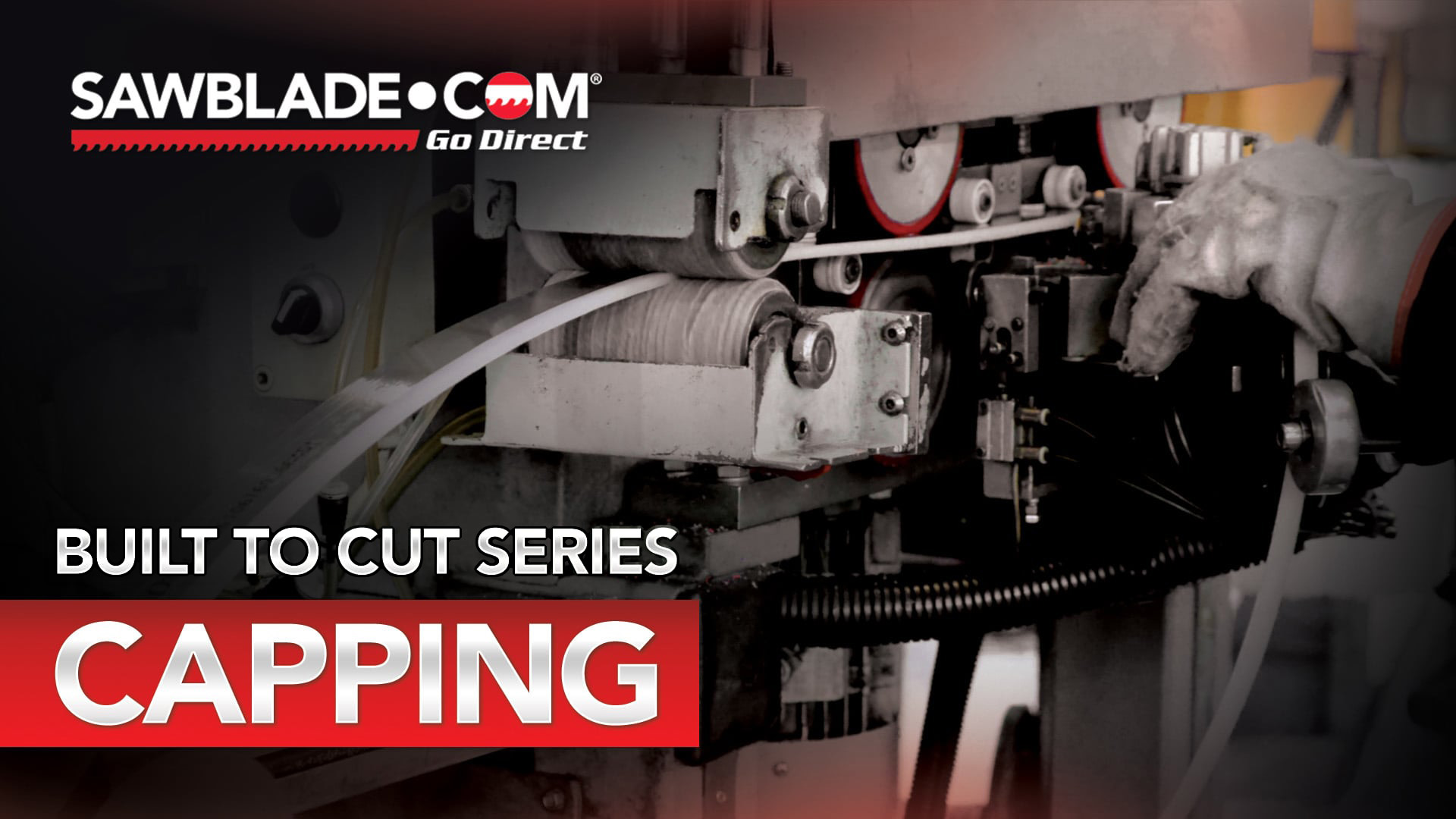
Capping is a protective covering placed over the teeth of the bandsaw blade at the factory.
Its purpose is simple: protect the cutting edge from the time the blade is manufactured until it is installed on the bandsaw.
The capping helps:
- Protect the teeth during shipping and handling
- Reduce the risk of tooth damage before installation
- Preserve the manufactured tooth geometry
- Keep the cutting edge protected while the blade is packaged
- Deliver the blade to the customer in factory condition
The capping is not part of the cutting process. It is temporary protection designed to remain in place until the blade is ready for use.
From the Factory to Your Bandsaw
At SawBlade.com, the goal is to protect the blade throughout its journey from the factory to the end user.
Once a blade has been manufactured, the teeth have already gone through a precise production process. Allowing those teeth to remain exposed during transportation would introduce an unnecessary opportunity for damage.
By capping the blade, the cutting edge remains protected through packaging and shipping until it reaches your bandsaw.
When Should You Remove the Capping?
The protective capping can remain on the blade while you install the blade on your bandsaw machine.
Once the blade is properly positioned on the machine, the capping can be removed to expose the teeth.
This provides an additional level of protection during handling and installation while helping the blade reach the machine with the teeth in their original factory condition.
Always follow proper blade-handling procedures and use appropriate personal protective equipment when installing and handling bandsaw blades.
Protecting the Precision Built Into Every Blade
Bandsaw blade performance starts with properly manufactured teeth. Protecting those teeth after production is an important final step before the blade reaches the customer.
Capping may be a simple addition, but it serves an important purpose: helping protect the precision cutting edge from the factory all the way to your bandsaw.
When your blade arrives capped, leave the protection in place during handling and installation, then remove it when the blade is securely positioned and ready for use.
Looking for the right bandsaw blade for your machine? Contact SawBlade.com and let our team help you find the right blade for your cutting application.