Manufacturing a high-quality bandsaw blade involves more than creating sharp teeth and selecting the right blade material. The blade must also remain straight and stable as it travels around the band wheels of the saw.
During manufacturing, processes such as heat treatment and sandblasting introduce heat and stress into the steel. Like other types of strip steel, a bandsaw blade can react to these forces by flexing or developing camber.
That is why straightening is a critical part of the bandsaw blade manufacturing process.
Why Bandsaw Blades Need to Be Straightened
After heat treatment and sandblasting, the blade may no longer be perfectly straight. Heat introduced during these manufacturing stages can cause the steel to move, flex, or develop unwanted curvature.
Even a small amount of camber can affect how consistently the blade travels around the band wheels.
The straightening process helps remove these irregularities before the blade moves on to the next stage of production.
What Is Camber in a Bandsaw Blade?
Camber is an unwanted curvature or deviation in the blade.
For a bandsaw blade to perform properly, it needs to travel consistently around the band wheels and through the blade guides. Excessive camber can make that movement less stable and potentially affect cutting performance.
Straightening helps correct the blade so it can track more efficiently on the bandsaw machine.
How the Straightening Process Works
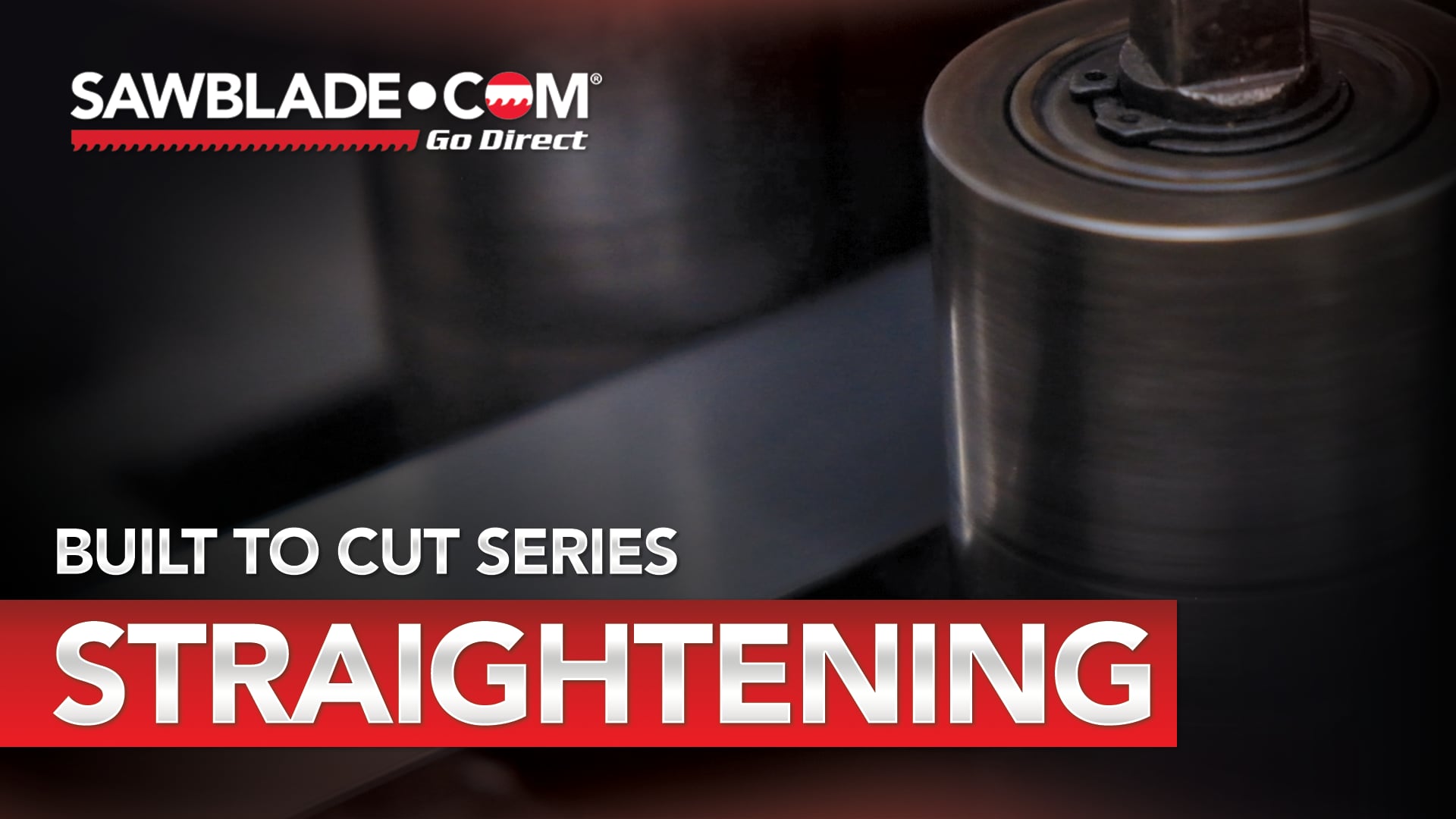
During straightening, the bandsaw blade passes through a series of rollers. These rollers help correct the shape of the strip and remove camber created during earlier manufacturing processes.
The blade is checked throughout this process to make sure the correction is happening properly.
This includes checking the blade:
- Before it enters the rollers
- During the rolling process
- After it exits the rollers
By inspecting the blade at multiple points, adjustments can be made to produce a straighter and more consistent finished blade.
Why Straightening Matters for Cutting Performance
Without proper straightening, a bandsaw blade may travel inconsistently around the band wheels. That instability can ultimately contribute to poor cutting performance.
Proper straightening helps:
- Remove unwanted blade camber
- Improve tracking around the band wheels
- Create more consistent blade movement
- Reduce instability during operation
- Support straighter, more accurate cuts
The objective is to give the blade a consistent path around the bandsaw machine so it can perform as intended.
Quality Control Throughout the Process
Straightening is not simply a matter of running the blade through a set of rollers once.
The condition of the blade is checked at the beginning, throughout the rolling process, and again at the end. This allows the operator to identify remaining camber and make the adjustments necessary to achieve the correct blade condition.
These quality checks are an important part of producing a bandsaw blade that will track consistently once installed on the machine.
A Small Manufacturing Step That Makes a Big Difference
The straightening process may not be something you see when installing a new bandsaw blade, but it plays an important role in how that blade performs.
By removing camber created by heat and other manufacturing processes, straightening helps the blade travel more efficiently around the band wheels and supports consistent, accurate cutting.
It is another important step in turning strip steel into a finished bandsaw blade ready for the machine.
Looking for the right bandsaw blade for your cutting application? Contact SawBlade.com and let our team help you find the right blade for your machine.